Underneath the Kimono, Practically
What the Kyoto shops provide, what they ask you to wear underneath (a simple T-shirt and leggings or shorts), men's and yukata layers, the bathroom procedure and winter layers.
Google’s autocomplete for kimono rental is a quiet catalogue of things people are too embarrassed to ask a shop assistant. Fair enough: here is all of it in one place.
Quick answers
What do you wear under a rental kimono? Your own underwear plus a thin, close-fitting layer. The featured shop, Kimono Rental MOMO near Kiyomizu-dera, suggests a simple T-shirt and leggings or shorts; Hakuu asks for a simple, close-fitting outfit. The shop supplies the under-robe and the dressing underlayers.
Do you wear anything under a kimono? Yes, always. The kimono never touches your skin directly: the shop’s under-robe (juban) goes on first, and WARGO, Hakuu and Mimosa all list undergarments in the rental.
What should men wear under a kimono? The same: underwear and a plain T-shirt or vest. Mimosa’s men’s set includes the underwear layer and, in autumn and winter, a haori jacket on top.
What do you wear under a yukata? Less, but not nothing. Yukata are unlined summer cotton worn over one light underlayer instead of the full kimono layers; Mimosa’s women’s yukata set includes that layer, and lace inner wear is a ¥550 extra.
What the shop handles
A thin under-robe (juban) goes on first and is part of every rental; it keeps the kimono itself off your skin, which is how a garment rented daily stays pleasant. Tabi socks for the sandals are included at MOMO, Hakuu, WARGO and Mimosa. You arrive in normal clothes, and what you wore waits at the shop: MOMO, Hakuu and Yumeyakata store clothes and bags for the day.
What you keep on
Simple, smooth underwear. For bras: soft, unpadded or sports styles sit best. The kimono silhouette is deliberately flat through the chest, and heavy padding fights the line the dresser is building. Nothing about this is enforced; it is just what photographs well. Keep makeup light too: MOMO asks for no heavy makeup because it can stain the collar. In winter, a low-necked thin thermal layer under the juban is invisible at the collar and decisive on a cold shrine morning. In summer, less is more, and the yukata switch exists for a reason.
The bathroom procedure
The searched-for question, answered plainly: hold the long sleeves out of the way (tuck them into the obi or over your arms), then lift the hem of each layer in turn, kimono first and then the juban, and gather them up together at the waist. Afterwards let them fall in reverse and check in the mirror that the collar still crosses left over right. The obi is not involved and does not come off. The first time takes two awkward minutes; after that it is routine. Western-style toilets make it easier than squat toilets.
Book the dressing, skip the worry
The dresser has seen every body and every question on this page. Show up in a thin T-shirt and comfortable underwear, hand over the decisions, and go take the photographs. For larger sizes, the plus-size guide names the shops that state them.
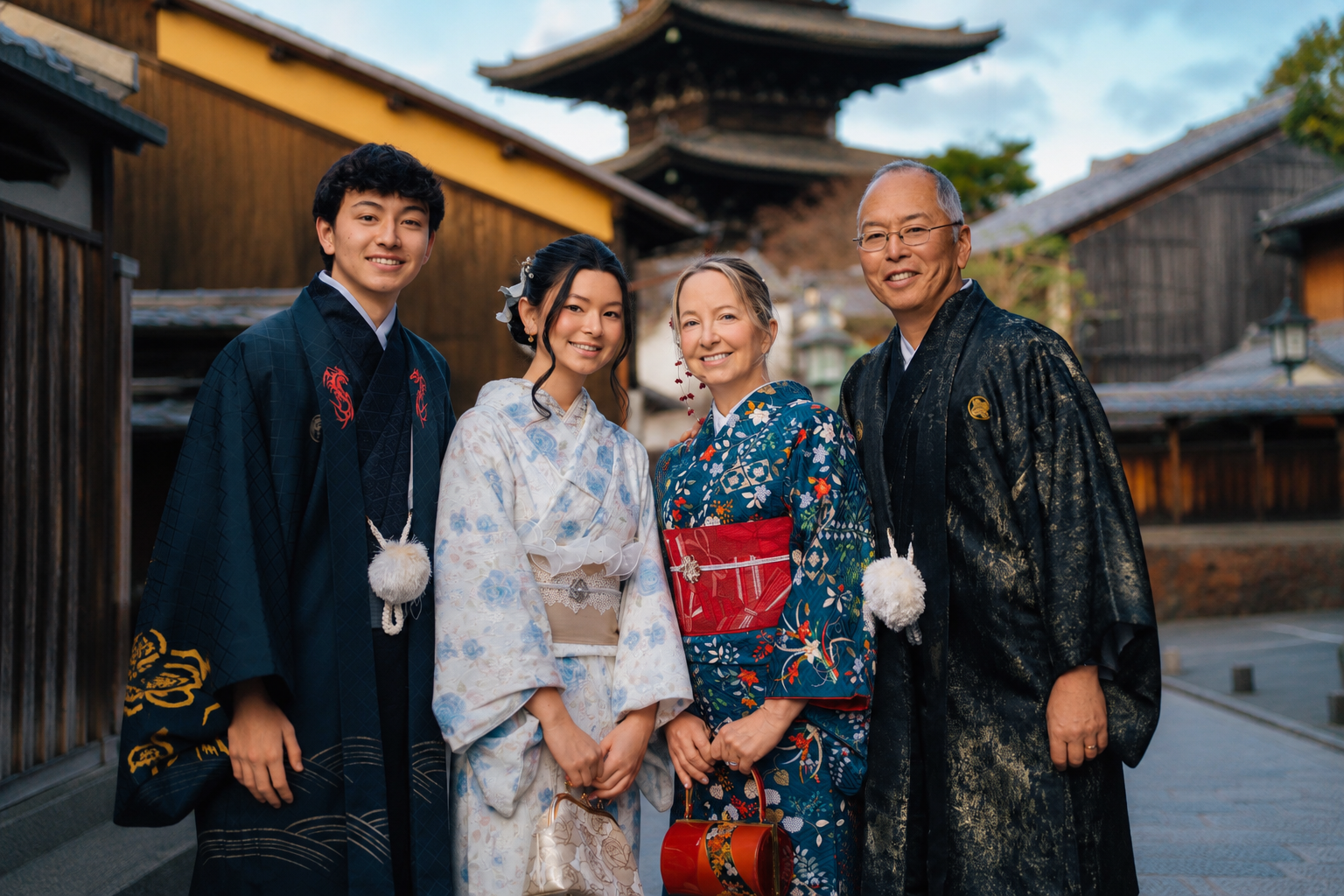
Book the Rental with Hairstyling
Rated 4.8/5 from 1,464 reviews. Kimono, obi and accessories, full dressing and hairstyling, about $21 in October 2026, with free cancellation up to 24 hours before; back at the shop by 5 PM.
Check Availability